
What Is Grandma's Costume Jewelry Worth?
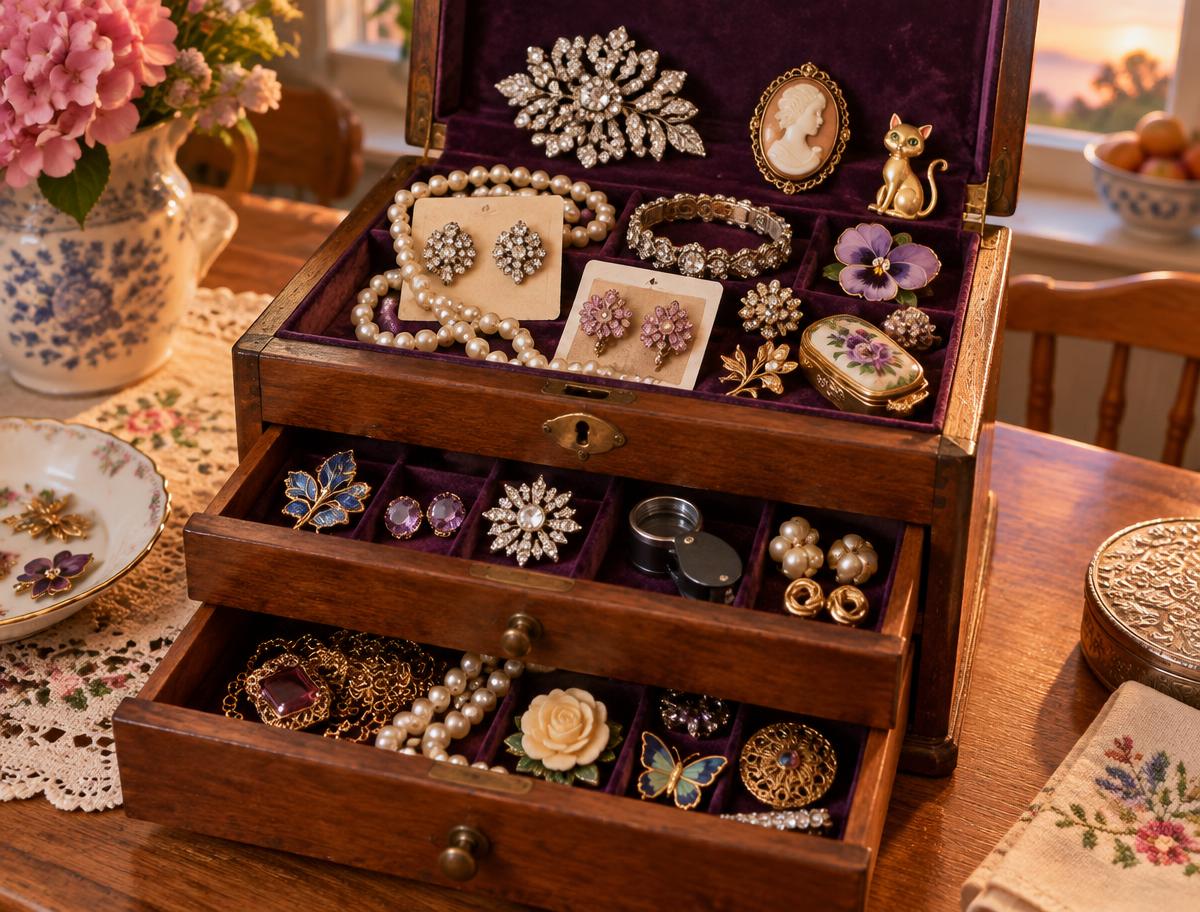
You open the drawer and there it is: a tangle of brooches, clip-on earrings, faux pearls and charm bracelets collected over a lifetime. Maybe it fills a jewelry box, maybe a shoebox, maybe a whole dresser. And almost everyone asks the same first question: is any of this worth anything?
The honest answer is that costume jewelry ranges widely. Some pieces are simply pretty and sentimental. Others carry the names of makers that collectors look for every week. The good news is that you don't need to become an expert to find out which is which.
What "costume jewelry" actually means
Costume jewelry is jewelry made to look fabulous without precious metals or gemstones — glass rhinestones instead of diamonds, gold-tone or silver-tone metal instead of solid gold, faux pearls instead of natural ones. It was made to be worn with outfits and changed with the seasons, which is why so many families have so much of it.
That doesn't make it worthless. Through the middle of the last century especially, designers produced costume pieces with real craftsmanship, and many of those pieces are actively collected today.
Turn it over and look for a name
The single most useful thing you can do is turn a piece over. Many makers stamped their name on the back, on the clasp, or on a small plate near the pin. Names collectors often look for include:
- Trifari, Coro, Monet and Napier
- Miriam Haskell, Eisenberg and Weiss
- Sarah Coventry, Lisner and Kramer
- Boucher, Hobé and Schiaparelli
A magnifying glass or your phone's camera zoom helps. If you find a name, take a close-up photo of it. And don't be discouraged by unsigned pieces — plenty of well-made vintage jewelry was never marked at all.
Other details that matter
Even without a signature, several things can make a piece more interesting to buyers:
- Matching sets, like a necklace with its earrings or a brooch with its bracelet
- Original cards, boxes or tags
- Rhinestones that are all present and still sparkle
- Enamel work and figural designs such as animals, flowers and holiday pins
- Clasps and fittings that look older than modern costume pieces
Also watch for pieces that aren't costume at all. Look for stamps like 10K, 14K, 18K, 925 or Sterling. Gold and silver often hide in the same box as the costume pieces, so it's worth a careful look.
What not to do
- Don't clean, polish or soak anything. Old plating and glued-in stones can be damaged quickly.
- Don't split up sets or throw away "broken" pieces before someone has looked. Single earrings and loose stones can still interest buyers who repair or repurpose jewelry.
- Don't feel you have to sort it all first. A whole box photographed together is a fine place to start.
Your options for selling
Families usually choose between a few paths: selling pieces one at a time online, selling to a jewelry buyer, or putting the collection into an auction. Selling piece by piece can take a lot of time — photographing, describing, packing and shipping every item. An auction lets bidders compete for the whole collection at once.
At Aether, jewelry is one of our favorite things to sell. We can buy a costume jewelry collection outright, or we can consign it into one of our online auctions, where bidders compete online from across the country. Our jewelry cataloging specialists photograph and describe each lot so it's ready to shine.
You don't need a whole house for us to help, either. A shoebox-sized mix is plenty to start.
The easiest first step
Spread the jewelry out on a table, take a few photos of the whole mix, and add close-ups of anything with a name stamped on it. Send them to us from the Sell Us Your Costume Jewelry page on our website. We'll tell you whether it fits an auction and talk through whether selling it outright or consigning it makes more sense for you.
Grandma's brooches told a story every time she wore them. With a little care, they can go on to someone who will love them just as much.